

making the invisible visible
designing technologies


Technologies, including AI, are the visible form of invisible causes. Any technology, such as AI, is a product — a product designed by humans to serve another human’s intentions. AI is a broad categorical term denoting a set of computerized technologies. AI is a human designed construct, a collection of computer technology products. That means that an AI tool kit is a set of human designed tools. Like any tool, AI technologies are designed to benefit owners while assisting users.
The genesis of tools and computer technologies begin with human intention. They are not inevitable spontaneous constructs of order and form. Computer technologies do not become sentient assemblies of nonliving matter as is often postulated.
AI technologies are functional assemblies of nonliving matter and energy that interact with living things. These technologies have function but not purpose. Purpose is provided by human designers through their design briefs. AI technologies serve someone’s purpose but not autonomously. Complicated or complex technologies can behave in startling ways by chance or through necessary encounters between and among the elements of an assembly, but the behavior is not autonomous intentionality.
The genesis of complex and complicated computer technologies can be traced from imagination to reality through a process of reification. The schema below is an example of how such a process is scored and used in both creation and critiquing of advanced technological design.
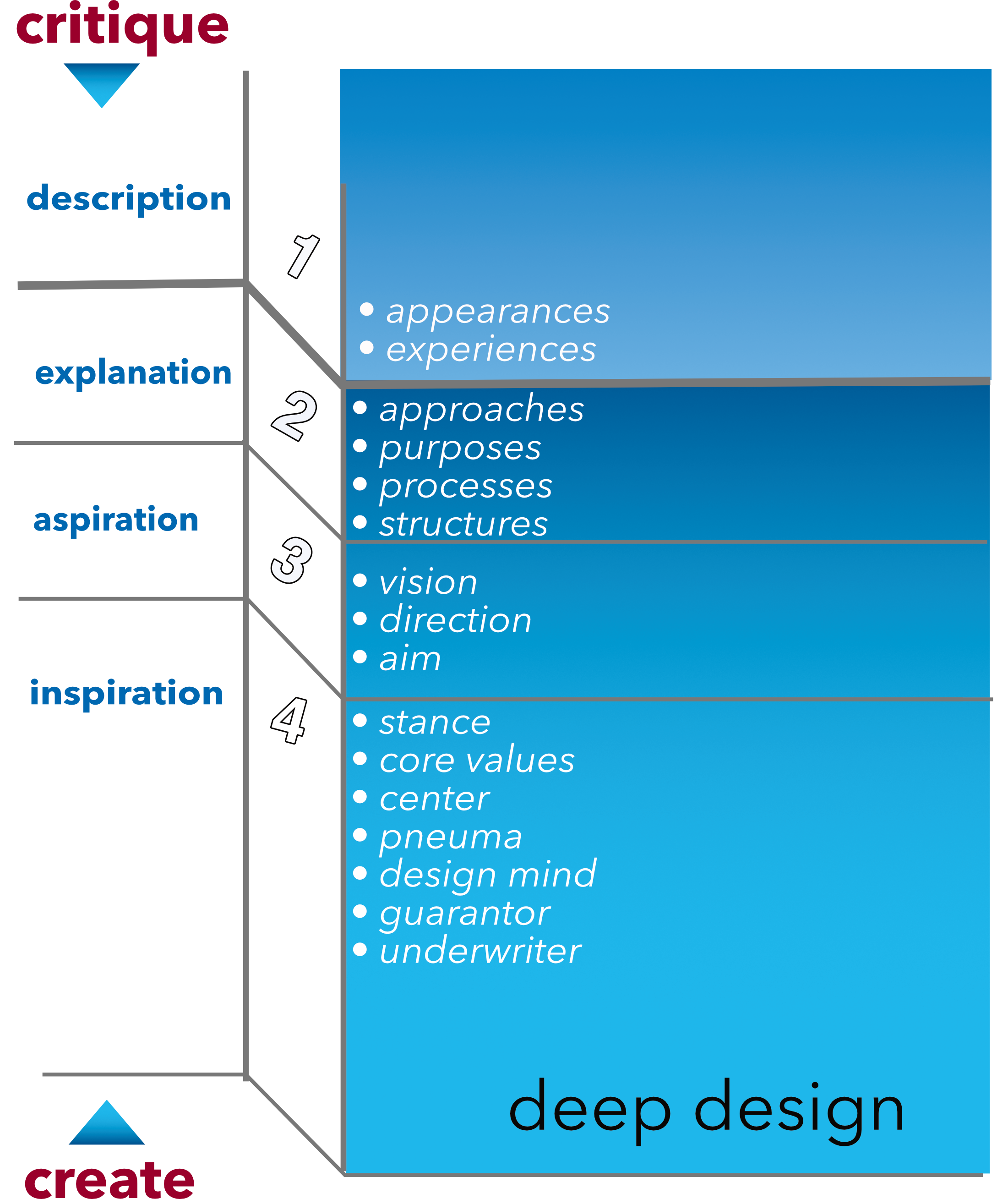
creating & critiquing design
The schema below shows the different points of transformation between phases of a deep design process. These transformation points locate the areas demarcating where the emergence of distinct types of understandings come into being — in the process of moving from abstract thought to something real and concrete.
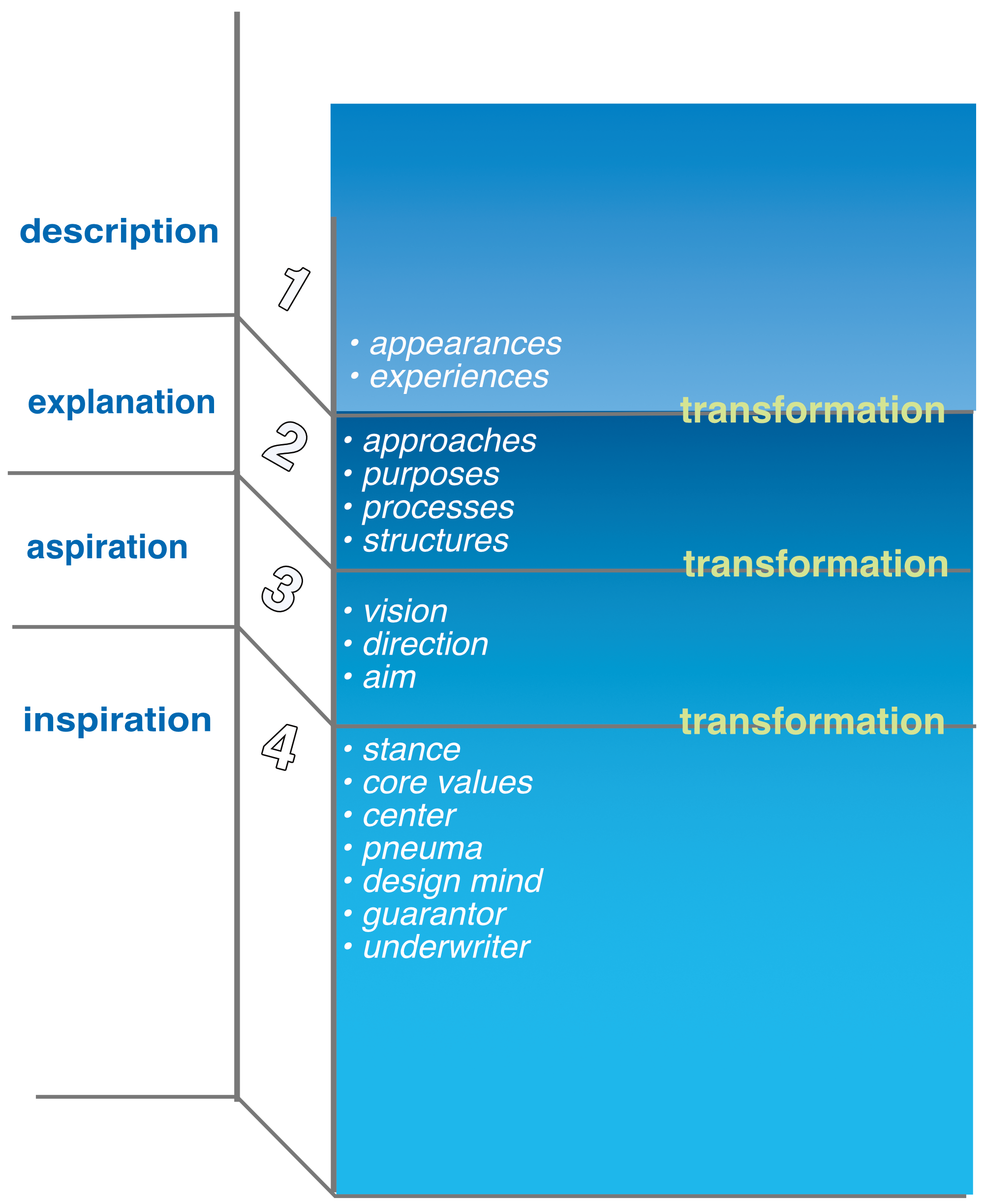
scoring the genesis of technologies
The appearance, or experience, of a designed technology occurs at a visible level where an instrumental designs can be evaluated and put to use.
But to create or critique a technology requires a deep dive into the underlying reasons, invisible to the eye and ear, that steer the unfolding emergence of a new design. The schema below shows the threshold between visible and invisible phenomena that mark different phases of any technological design process.
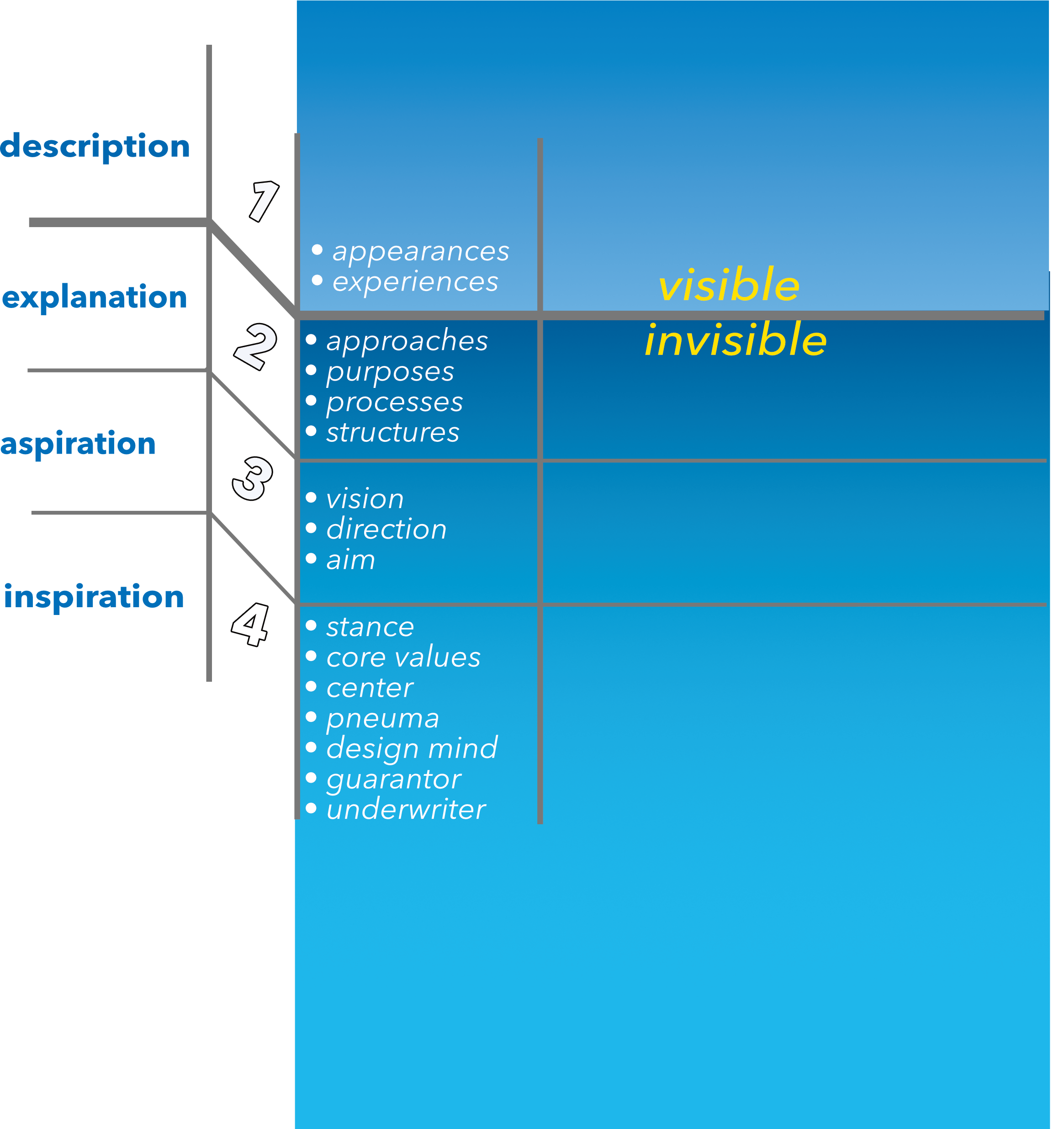
threshold between visible & invisible perceptions
The category of artifacts made by humans denoted as ‘technologies’ is inclusive of what is misidentified as ‘artificial intelligence’. The collection of tools included in this labeling can be seen as a tool set rather than some type of artificial brain or mind. The schema below shows the point of appearance, or outcome, of technology production in the process of instrumental tool creation and not the point of usage of those tools in a design process.
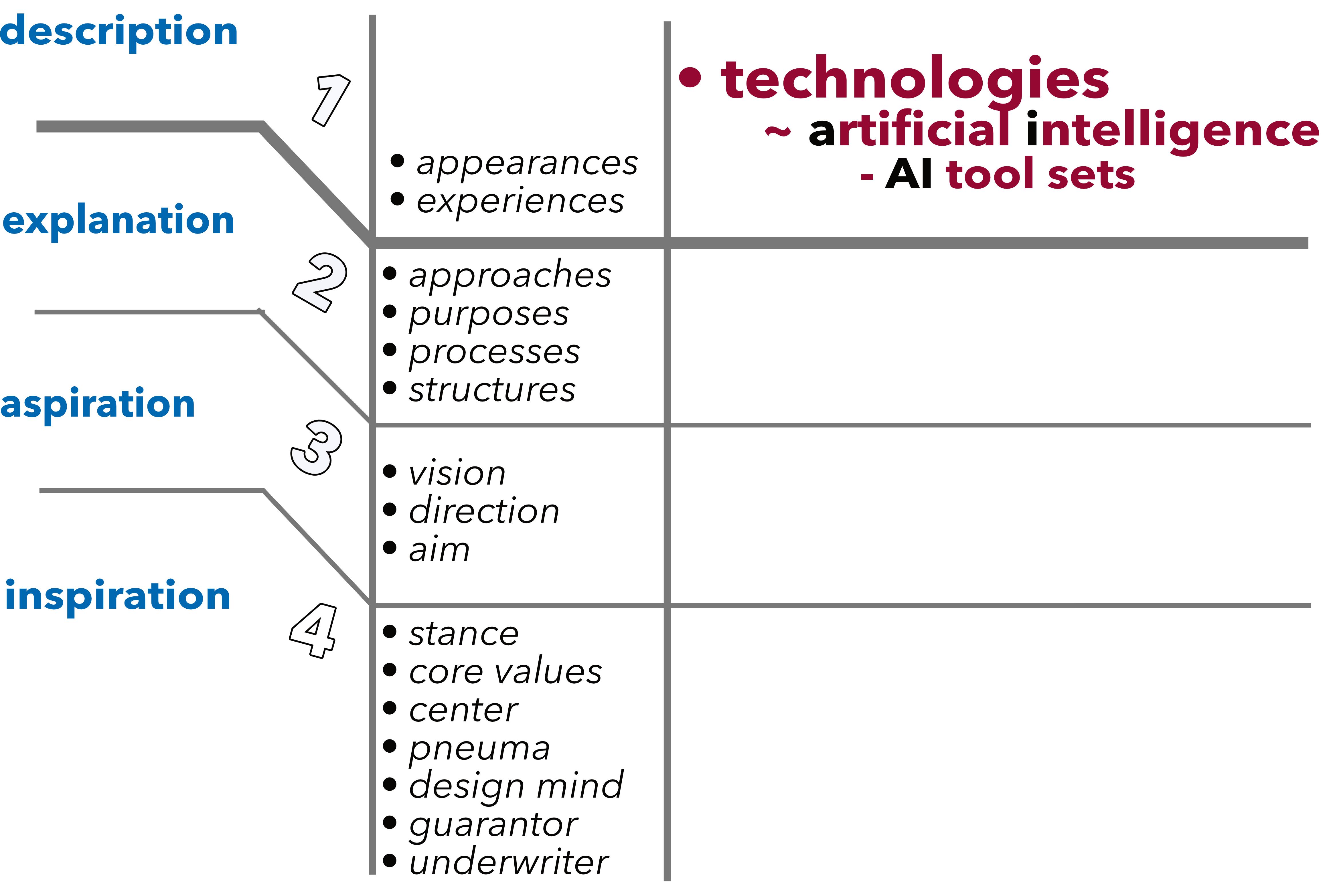
AI technology design stratum
Artificial intelligence is not sentient nor is it capable of such. It is a technology designed by humans to serve the needs and desires of specific people. They own the technology and use it for their ends. The technologies have assigned functions but not purpose. These technologic designs are based on an owner’s interpretation of what the user’s desired outcomes are or should be.
An evaluation of the Apple Company’s early technologic consumer products can be initiated as a start an example of technologic designing although simplified here. Any real assessment would be much more detailed and extensive than shown in this graphic but it provides an introduction to staging points for a full assessment.
To understand the causes that pulled the technologies into existence, a deep design framework is helpful to use. The design process, scored as a deep design process, shows the stages and phases that are passed through in the development of complicated and complex instrumental technologies.
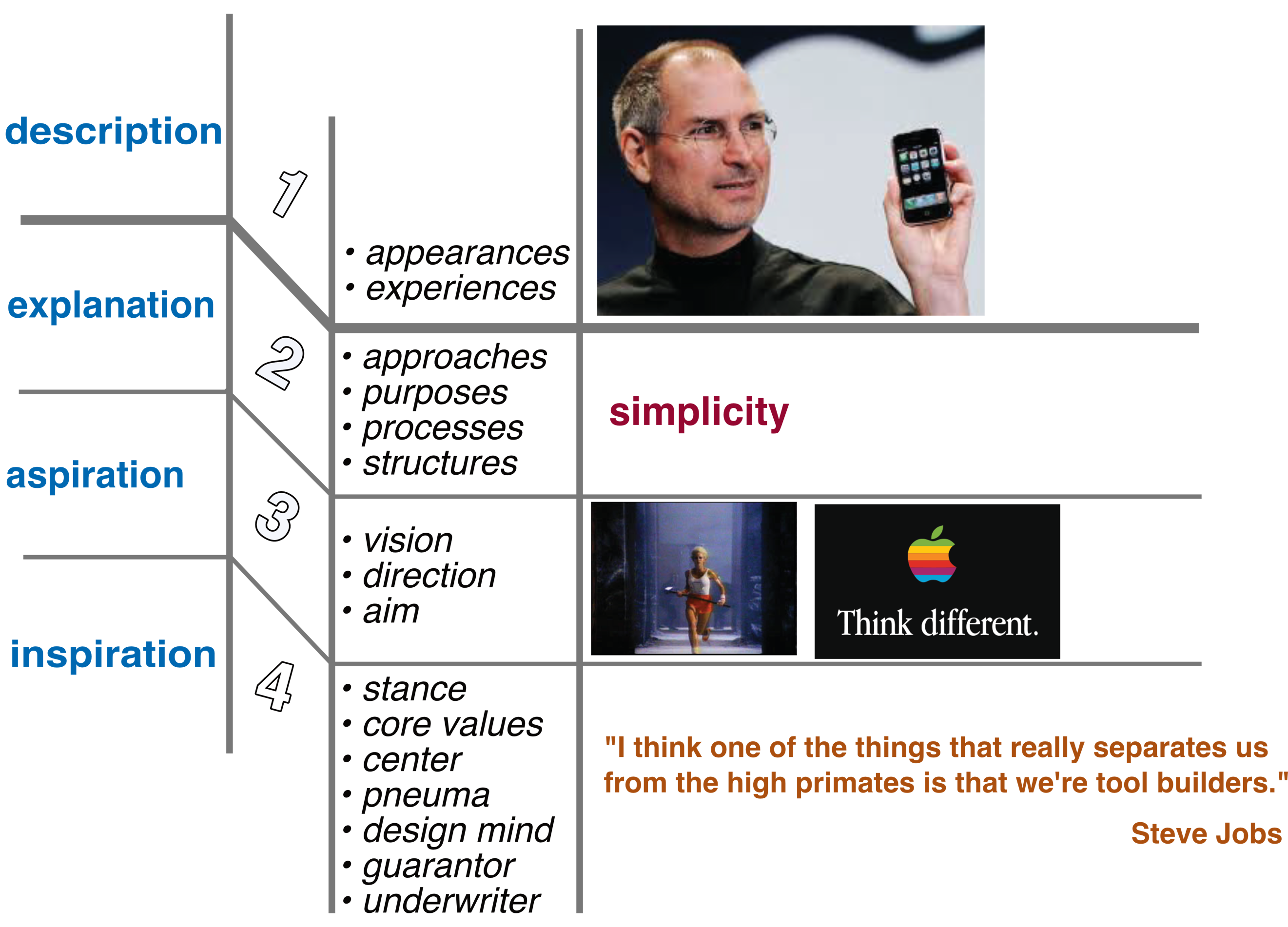
Apple technologies deep designs
The outcomes of well managed technological designing cannot be assumed to be good designs however (see schema below). The actual value of designed outcomes depend on the qualities of the inputs and integration of ingredients in the earlier phases and stages of the designing process. A well-executed design process does not guarantee a good design is produced.
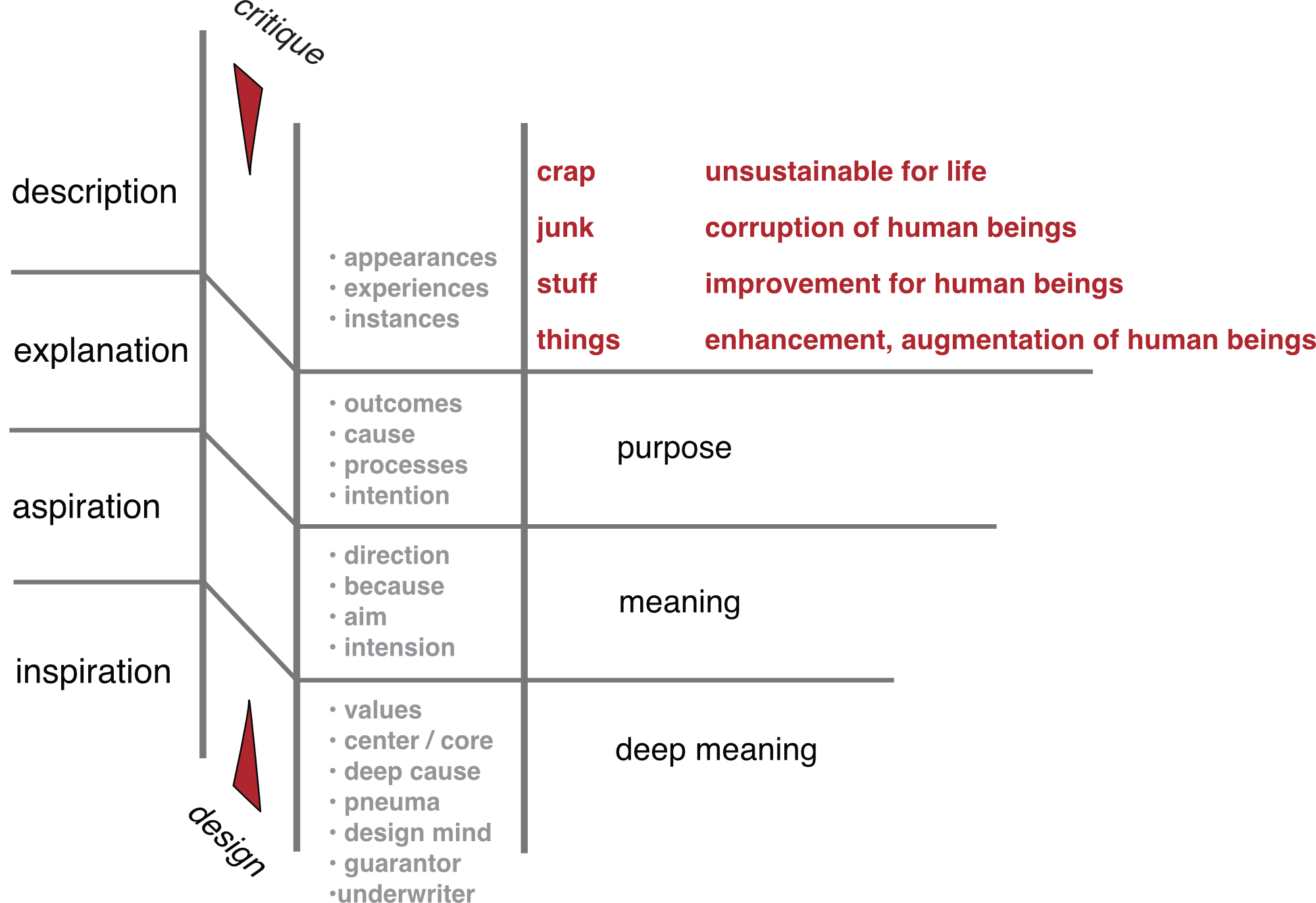
outcomes of designing & critiquing
In the end the outcomes of deep designing represent a visible depiction of invisible causes. They make the invisible design forces visible for the better or for the worse if necessary..
(Material for further discussions)
