

power without wisdom
Too many apprentices and not enough sorcerers — a fable for modern technology.

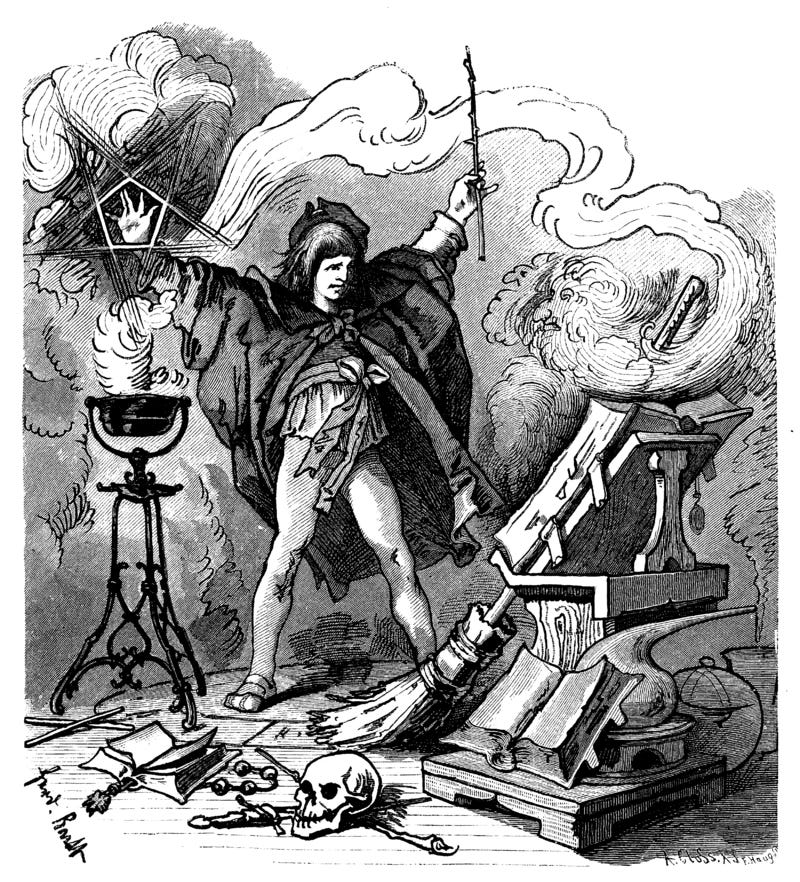
the sorcerer’s apprentice
Illustration from around 1882 by F. Barth
The noise, confusion, and angst surrounding the introduction of artificial intelligence (AI) technologies into people’s lives is immense and intense. Information concerning the impacts and consequences of this family of AI technologies is not congruent or clear. The identities of the cardinal stakeholders and beneficiaries of the technologies are unclear as well. The benefits to anyone are uncertain.
The challenges surrounding human relationships with new technologies have been of concern from the beginning of human history. The appearance of digital technologies, most recently artificial intelligence (AI), is just the latest point on a timeline mapping the course for creating and adapting to new technological disruptions.
The sorcerer’s apprentice
The cautionary tale of the sorcerer’s apprentice is an example of the challenges and consequences of animating human-created technologies ahead of the prudent consideration, creation, and application of those technologies — action without connection to competence and ability. It is the engagement of human-animated power without the presence of prudent concomitant considerations.
The relationships between people and their created technologies have been recurring thematic questions throughout human evolution. Expression of this fundamental human challenge, known in various fables or narratives, is essentially some variation of the sorcerer’s apprentice, which can be traced back to the Classical Era of Greek culture:
“It’s a very old story, one that goes back almost
2,000 years ago, a legend about a sorcerer who had an
apprentice…[who] started practicing some of the boss’s
best magic tricks before learning how to control them.”
Deems Taylor re Disney’s Fantasia movie
This fable, made famous in a poem in 1779, The Sorcerer’s Apprentice (Der Zauberlehrling) by Johann Wolfgang von Goethe, was made popular to the general public in Walt Disney Studios’ film Fantasia in 1940.
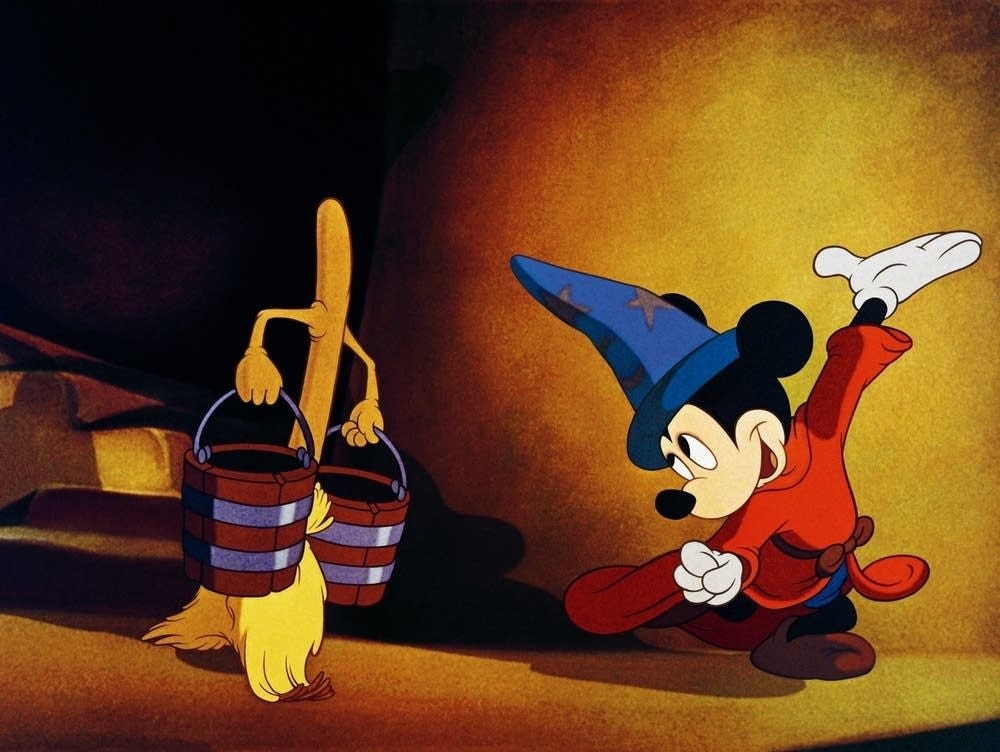
Sorcerer’s apprentice Disney’s Fantasia (1940)
https://video.disney.com/watch/sorcerer-s-apprentice-fantasia- 4ea9ebc01a74ea59a5867853
Power exercised through wisdom
Technology is a result of the domestication of power and energy by humans. Technology has function but not purpose, like all tools. Purpose comes via human agency. Technology can be used to assist humans in their chosen activities, or human activities can be given over to technological functioning. It’s someones choice.
The recent emergence of a class of digital technologies, known collectively as artificial intelligence (AI), has pushed the choice of advanced technology as an assistant to, or replacement of, human activity to the forefront of critical concerns.
In relation to the human ‘being’, AI Technology is shallow and narrow in comparison. AI can ape human actions but not activities. AI is complicated but not complex when contrasted to the full spectrum of human ‘being’.
Human activities and AI as a replacement or augmentation of such activities
Human ‘living’ activities, the activities of sentient living systems, are complex and individually evolving for each particular individual human within particular contexts. There are ‘patterns’ of individual activities as well — human activity, such as ‘play’, for example. Technologies can be used to assist in winning games or assist in staying in the games — depending on the pattern in play (pun intended). The writing of James P. Carse is a great introduction to patterns of play — finite and infinite games.
A finite game is played for the purpose of winning, an infinite game for
the purpose of continuing the play.
James P. Carse,
Finite and Infinite Games: A Vision of Life as Play and Possibility
Living life fully, despite the presence and impositions of out-of-control technologies and unprepared apprentice technologists, requires not just being an observer of life but a full participant in life. It requires human engagement.
Power exercised without wisdom — agents without apprenticeship experience.
Technologies are often created for power and control rather than service to cardinal stakeholders. The dominant pattern for the development of normative technologies has been stable over the past several decades.
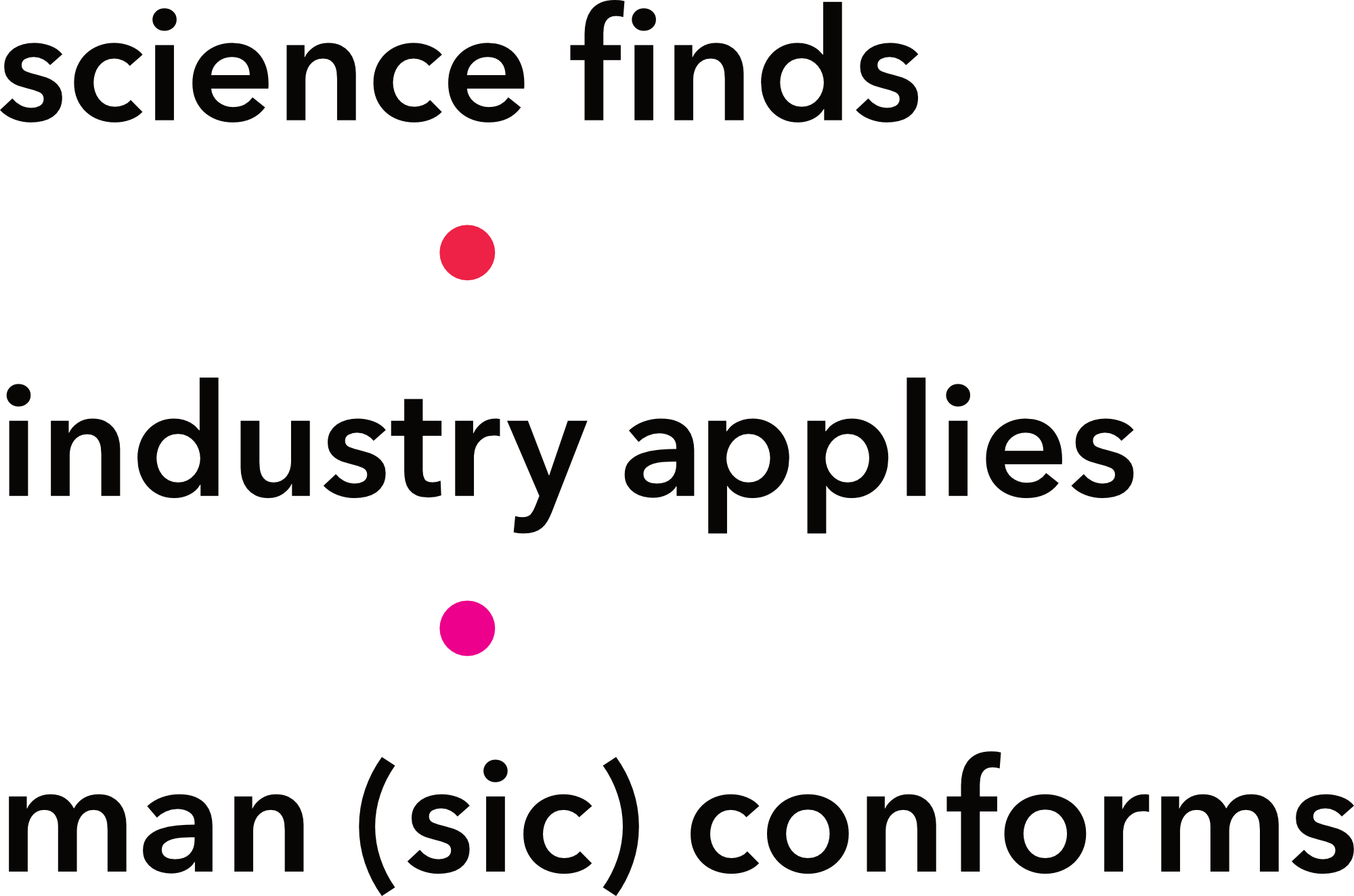
1933 World’s Fair motto
New patterns ought to be considered, given the fraught reactions to the recent creations and innovations of technologies like AI. Serious consideration needs to be made for alternative strategies to imagine, produce, and apply highly complicated and consequential technologies like AI. For example:
1) Mimicking human activities with AI — replacement
Aping human activities for making a living include working, jobs, careers, occupations, professions, trades, livelihoods, vocations, roles,
2) Assisting human activities with AI — augmentation
Creating ‘tools’ for AI activities
3) Substitute human activities with AI — agentics (slang)
Supercede human agency through agentics:
Agentic refers to the ability to act independently and make decisions toward achieving a goal. In the context of artificial intelligence, it describes systems that can autonomously plan and execute tasks with minimal human intervention
(AI generated text).
Wisdom before power
The fable of the wizard’s apprentice is not to be taken literally as an appeal for apprenticeship programs, but to take it as a narrative about the dangers of unqualified agents activating technologies they have no understanding of or skills to manage. It is a narrative about the need for people — the wizards — who can design and manage the right technologies as appropriate means for desired ends.
Taking action before developing competencies and abilities is the opposite of gaining competence for action. The preferred sequence is to think before doing, using the best tool set and skill set possible.
Investments by corporations and agencies in the development of tools rather than people are not systemic strategies and are not the best strategies in the near or long term. Investments in research and problem-solving approaches to inquiry, rather than systemic and design approaches to inquiry, short-change developing competence for determining why over how. ‘Silver bullets’, ‘easy buttons’, ‘best practices’, and other panaceas dominate the market for approaches to preparation and application of technological innovation. ‘Move fast and break things’ is a replacement strategy for thinking about what you are going to do and why for whom. ‘I am a person of action!’ is treated as a declaration of competency.
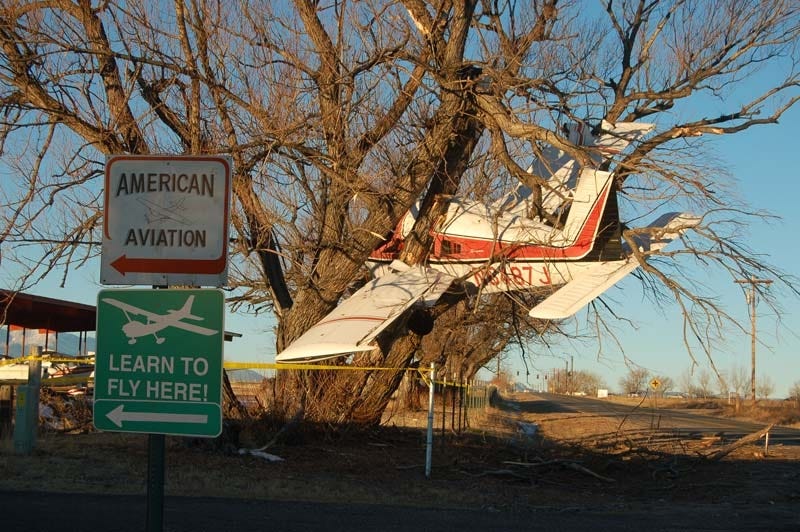
I am a doer, not a thinker!
Wisdom plus power
Who are the best sorcerers? They are scholar-practitioners. They are polymaths of exceptional creative competence who are systemic in inquiry and action. They have instrumental mastery in matching how something is created in response to why something is created. They engage in deep learning and skilled crafting. They show great courage in setting courses and navigating unknown territories. They have well-developed character and self-awareness. They are ethical and empathic. They use a conjunction of experience and ‘new’ mind for their encounters with each systemic human activity. They remain their own apprentice to their wizard nature.
How do apprentices become wizards? They start by acknowledging that it takes an investment of time and attention, and a commitment to life-long and life-wide learning. They must learn how to invoke new designs of technology in service of others and not just themselves. They must become skilled masters in guiding complex processes that are indeterminate and desired.
So, I wrote a comment yesterday about AI incompetence out of frustration in dealing with the digital world. It didn't get posted because I didn't follow the "assumed' protocol and get signed in before I read and replied to the substack posting. Icons without meaning aren't "Moving fast and breaking things" They are just stupid. I think driverless cars who run over cats and kill older ladies who are pushing their bicycles in the crossing walk are worthless tools, if not criminal ones. I know from personal experience that a tool that replaces an existing icon that I am familiar with ...one of hundreds I must recognize... is 'efficient, and more helpful' when it crashes or sends my work somewhere without permission and refuses to tell me where it went or how to get there to find it. The reality is talented IT folks who crank out the code and programs prematurely to move fast and make money and break things, need to be held responsible for what they break and pay the price for that!
Wonderful analogy with my favorite movie from my childhood, the “The Sorcerer’s Apprentice” in Disney’s Fantasia. Even then I understood unanticipated consequences, and it certainly applies to much of our technology today as you eloquently wrote. The recent demolition of the East Wing of the White House comes to mind. No one seems to have systemically thought through what is really desired there and how we can achieve something useful and truly beautiful instead of superficial.